Workshop Diagnostics · 2026 Roundup

Find the fault before the dealer does.

Six practical diagnostics tools for riders who want to read a code, trace a bad ground, or catch a dying battery while the bike is still in the garage. No catalog filler — just OBD-II adapters, standalone readers, multimeters, and battery monitors that earn a place in the tool drawer.

Updated: August 31, 20266 workshop picksDIY-first, shop-ready

OBD-II adapters & dedicated readers

A check-engine light is a clue, not a diagnosis. Start with a tool that can pull the code and show enough live data to decide whether you have a sensor problem, a wiring problem, or a bike that simply needs a proper service. Motorcycle coverage and connector fit matter more than a cheap car-scanner price.

OBDLink MX+ Bluetooth OBD-II Scanner for motorcycle diagnostics
OBD-II

OBDLink MX+ Bluetooth OBD-II Scanner

The phone-connected pick for riders who want a live sensor dashboard rather than a one-time code read. It is small enough to keep in the bike's tool pouch, supports motorcycle-focused apps, and makes logging RPM, throttle position, coolant temperature, and other available data much less intimidating. The right choice when you like seeing the story behind the code.
ANCEL Moto310 Motorcycle OBD-II Code Reader
Code Reader

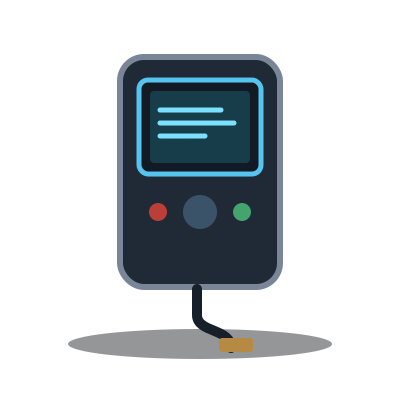
ANCEL Moto310 Motorcycle OBD-II Code Reader

A standalone alternative for riders who do not want their phone involved in the diagnosis. Its own color display, motorcycle-specific coverage, live data, freeze-frame capture, and VIN lookup make it the straightforward grab-and-go reader. Spend less than the Bluetooth setup when code reading is the main job.

Electrical and multimeter diagnostics

When a bike cranks slowly, an accessory cuts out, or a fuse keeps blowing, a multimeter tells you whether to look at the battery, the charging system, a switch, or a connection. Use the meter to measure, not guess. Keep the probes on low-voltage motorcycle circuits unless you know the circuit and the meter's rating.

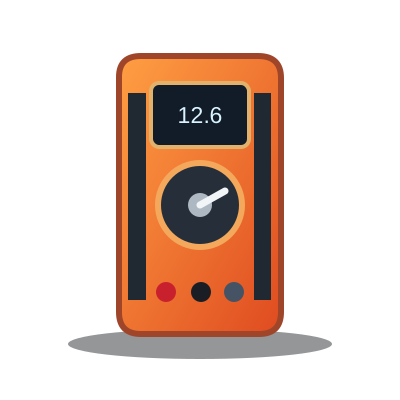
Fluke 117 Handheld Digital Multimeter for motorcycle electrical diagnostics
Pro Grade

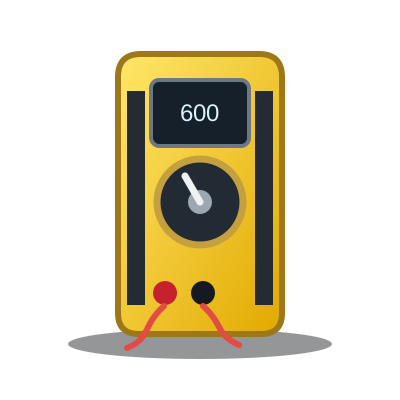
Fluke 117 Handheld Digital Multimeter

The long-term bench tool for electrical work that needs clear, repeatable readings. True-RMS, auto-ranging, a backlit display, and non-contact voltage detection give you a forgiving meter for tracing accessory circuits, checking charging output, and verifying grounds. It is more meter than most motorcycles require — which is exactly why it is the one you will still own twenty years from now.

Klein Tools MM6000 Auto-Ranging Digital Multimeter for motorcycle workshop use
Best Value

Klein Tools MM6000 Auto-Ranging Digital Multimeter

The workshop-floor value pick: drop-tested, auto-ranging, True-RMS, and equipped for temperature, micro-amp parasitic-draw checks, and continuity work. The magnetic hanger is especially useful when both hands are busy at the subframe. Choose it when you want broad capability without paying the Fluke premium.

Battery health & monitoring

Battery problems are often intermittent right up until they are not. A tester gives you a quick health snapshot; a monitor watches the bike between rides. Use both when a battery is aging or the bike spends long stretches parked. The goal is to replace a weak battery at home, not at the first fuel stop after winter.

CTEK 12V Battery Tester PRO 12V for motorcycle batteries
Battery Tester

CTEK 12V Battery Tester (PRO 12V)

A fast under-load check for riders who want to know whether a battery needs replacing or simply needs charging. It works without removing the battery, reports state of health and remaining cranking strength, and is the cleanest first step when the starter sounds slower than usual. Keep it near the charger and use it before every long trip on an older battery.

BM2 Bluetooth 12V Battery Monitor for motorcycle battery voltage alerts
Bluetooth

BM2 Bluetooth 12V Battery Monitor

The set-and-forget watchman for bikes that sit between rides. It connects at the battery posts and reports voltage to a phone, alerting you when the battery drops below a healthy cranking threshold. A small install that catches a slow drain or aging battery while the bike is still safely parked in the garage.

The Diagnostics Progression

Start with the tool that answers the question you are asking today, then build outward. The workshop hub keeps the garage setup organized, the maintenance roundup covers the routine work that prevents faults, and the diagnostics guide explains the safe testing sequence. If you are still assembling the rest of your rider kit, use the Starter Pack or return to the Gear Hub.

Code-Check Starter

$75–$120

For the rider who wants to stop guessing when the warning light appears. Choose a standalone reader for simplicity or a Bluetooth adapter for app-based live data.

  • ANCEL Moto310 Motorcycle OBD-II Code Reader — standalone screen and motorcycle-specific code coverage.
  • OBDLink MX+ Bluetooth OBD-II Scanner — phone dashboards and data logging when supported.

Electrical Troubleshooter

$120–$280

For accessory installs, charging checks, and the first serious electrical fault. A dependable meter turns “it feels electrical” into a measurable next step.

  • Klein Tools MM6000 — broad workshop capability at the value end.
  • Fluke 117 — premium True-RMS meter for a tool you will keep for years.

Battery Watch System

$40–$85

For older batteries, seasonal storage, and bikes that spend more time parked than ridden. Test the battery when you need an answer and monitor it between rides.

  • CTEK 12V Battery Tester — quick under-load health check.
  • BM2 Bluetooth 12V Battery Monitor — phone alerts for voltage drift while parked.

Frequently Asked Questions

Is a Bluetooth OBD adapter better than a dedicated motorcycle code reader?

A Bluetooth adapter is the better pick when you want live dashboards, phone logging, and a small tool that can stay in your workshop kit. The OBDLink MX+ pairs with supported apps and streams sensor data. A dedicated reader like the ANCEL Moto310 has its own screen, so it works without a phone and is simpler for occasional code reads. The broader diagnostics guide explains which workflow fits each rider.

How do I know whether an OBD scanner is compatible with my motorcycle?

Check the motorcycle's model year and supported protocol, whether it uses a standard OBD-II port or a brand-specific adapter lead, and whether the app or reader lists the motorcycle manufacturer. Motorcycle-specific coverage matters more than the word OBD-II on the box. Compare the OBDLink MX+ and ANCEL Moto310, then use the workshop hub to confirm fitment details for your garage setup.

What motorcycle diagnostics can a DIY rider safely do at home?

A careful DIY rider can read and document trouble codes, view basic live sensor data, check battery voltage and charging behavior, test continuity, and look for parasitic draw with the right meter settings. The Fluke 117 and Klein MM6000 cover electrical checks; the diagnostics guide lays out a safe sequence. Do not probe airbag, ignition, or high-current circuits casually, and stop when a test requires manufacturer service information.

Can motorcycle OBD tools clear trouble codes?

Some can, but clearing a code is not the same as fixing the fault. The OBDLink MX+ and ANCEL Moto310 are the roundup's code-reading tools; confirm your motorcycle and app support clearing before relying on that function. Record the code and freeze-frame information first, repair the underlying issue, then clear and retest. Pair code work with the battery and electrical checks in the workshop hub.

Keep the garage connected: Diagnostics Guide · Workshop · Maintenance · Starter Pack · Gear Hub

Shop Motorcycle Diagnostics Tools

Six workshop picks for reading codes, tracing electrical faults, and knowing when a battery is ready to retire.

Shop Workshop Tools →